


Atmospheric Extratropical Dynamics
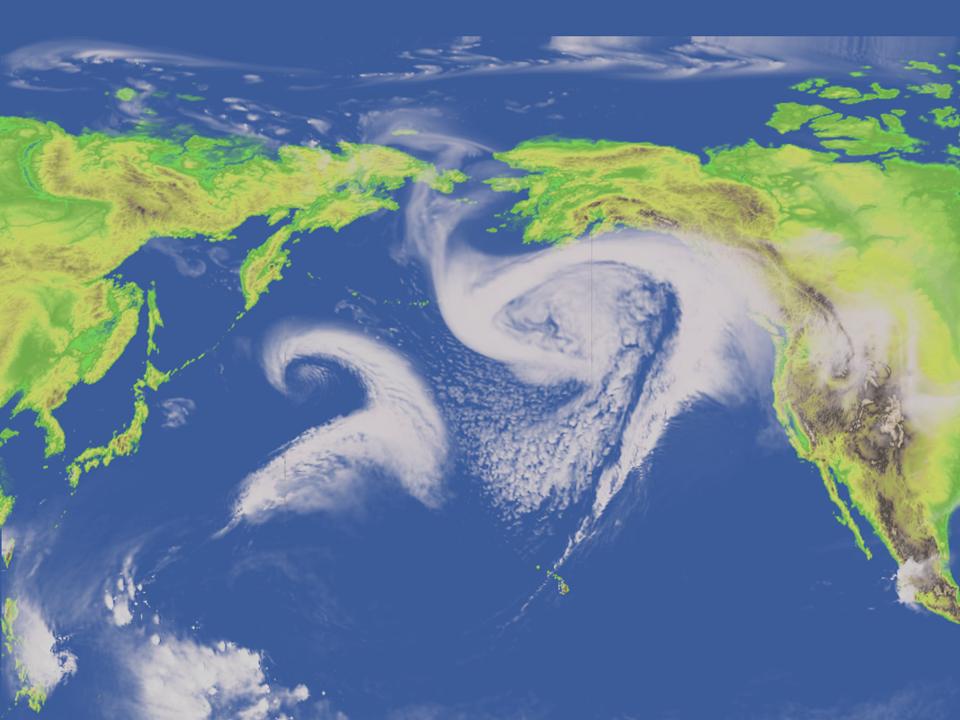
From Isidoro Orlanski 2007: The rationale for why climate models should adequately resolve the mesoscale In High Resolution Numerical Modelling of the Atmosphere and Ocean, New York, NY, Springer-Verlag, 29-44.
Storm track dynamics
Storm tracks are the back bone of weather and climate in the extra-tropical regions of the globe. The storm tracks are where daily weather is generated. Their structure helps generate the flow patterns that we see in the larger scale circulations of the atmosphere and oceans, helping to shape the global climate.
Orographic gravity wave drag
It is well known that small scale features in the orography of the Earth’s surface, features that are sub-grid scale in global atmospheric models, can generate substantial drag on the west-to-east flow in the mid-latitude atmosphere, modifying the atmospheric circulation in important ways. We are working to improve representation of this effect in our models.
Expansion/contraction of the circulation in response to global warming and the ozone hole
Observations suggest that the mid-latitude surface westerlies have moved polewards in recent decades, most clearly in the Southern Hemisphere. Models indicate that both increasing ocean surface temperatures and the ozone hole are capable of generating shift. The dynamical mechanisms by which both of these agents cause the circulation to expand polewards are being investigated
Polar lows and the meteorology over the sub-polar North Atlantic