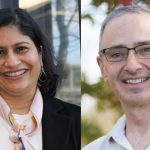
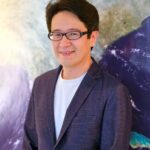
Dr. Venkatachalam “Ram” Ramaswamy was a respected scientist, leader, mentor, and colleague who made a lasting impact on GFDL and the broader climate science community. He first joined GFDL as a visiting scientist in 1985 and later served in several leadership roles, including group leader, senior scientist, Acting Director, and Director of the Lab. Throughout […]
Jing Feng, David J. Paynter (GFDL), and Raymond Menzel (formerly GFDL) were recognized for authoring one of the Top 10% Most-Viewed Papers in Journal of Geophysical Research: Atmospheres in 2023. Their paper, “How a Stable Greenhouse Effect on Earth Is Maintained Under Global Warming,” examines how Earth maintains energy balance as surface temperatures rise. Using […]
Shiv P. Raghuraman, David J. Paynter (Leader, Atmospheric Physics Division, GFDL), V. “Ram” Ramaswamy (Director, GFDL), Raymond Menzel, and Xianglei Huang have been recognized for authoring one of the top viewed articles in Geophysical Research Letters for 2023. Their paper, “Greenhouse Gas Forcing and Climate Feedback Signatures Identified in Hyperspectral Infrared Satellite Observations”, analyzes nearly […]
From warming waters and rising seas to melting sea ice and changing ocean pH, climate change is having major impacts on the nation’s marine and Great Lakes resources. In order to effectively prepare for and combat the effects of climate change, policymakers need robust historical simulations, as well as forecasts and projections, about how ocean […]
A comprehensive understanding of methane’s contribution as a greenhouse gas in the atmosphere, crucial for effective climate mitigation policies, remains elusive due to the overlap of natural (wetlands) and anthropogenic (natural gas, agriculture, sewage, landfills) sources. Larry Horowitz and Vaishali Naik, both Physical Scientists at GFDL, are co-Principal Investigators on a study that was awarded […]
GFDL recognizes National Intern Day and celebrates the contributions of our gifted interns. This year, in partnership with Princeton University, GFDL welcomed its largest group ever—23 talented students from a range of internship programs, such as NOAA’s Educational Partnership Program with Minority Serving Institutions Cooperative Science Centers, NOAA Experiential Research and Training Opportunities, the Ernest […]
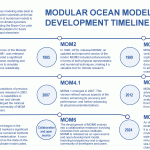
June marks Ocean Month, so it is fitting to acknowledge the significant impact that oceans have on climate and everyday life, and to highlight the importance of continued research and innovation in ocean modeling. At GFDL, the latest version of the lab’s Modular Ocean Model, MOM6, represents a major advancement in modeling oceanic and climatic […]
In celebration of Earth Month, GFDL shares how the lab is investing to meet weather and climate goals through some of its advanced global models: CM4, SPEAR, ESM4, and SHiELD. These realistic models play an important role in enhancing our comprehension of the Earth system, each providing unique insights into the science underpinning our understanding […]
Liping Zhang and Hiroyuki Murakami, scientists at GFDL, have been awarded funding for a new climate projections project that will spotlight the critical issue of extreme sea level events along the U.S. East Coast, emphasizing their societal impact. These events, often fueled by storm surges during extreme weather occurrences, substantially threaten lives and infrastructure in […]
If you live along a U.S. coast, you’re likely familiar with NOAA’s seasonal hurricane forecasts. Released each year in May (and updated in August for the Atlantic region), these forecasts provide an important preview of what each year’s Atlantic and Pacific hurricane seasons will bring. “Seasonal predictions provide valuable lead time for communities to prepare […]